

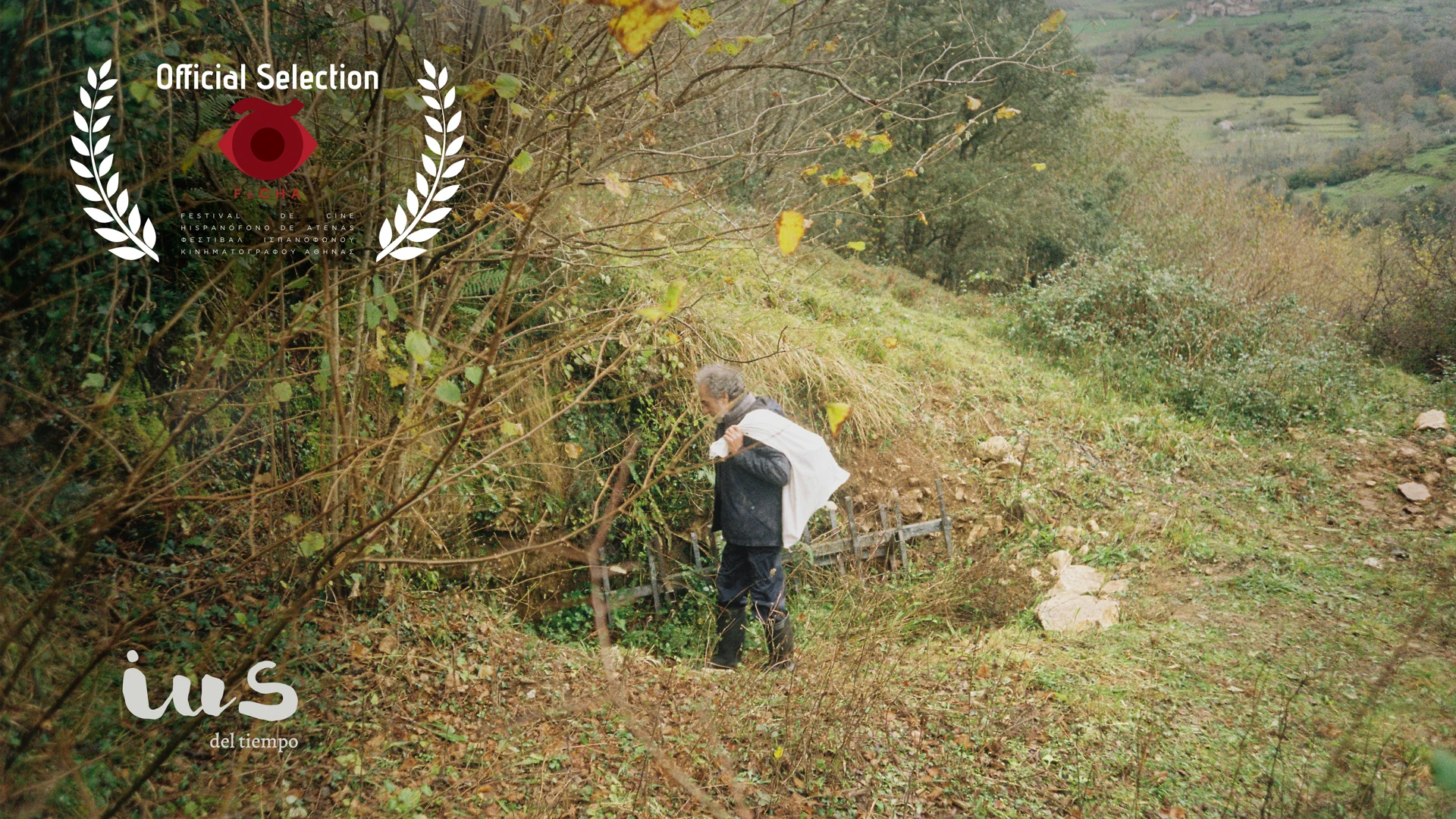
The Asturian queer short film continues its strong international run with a selection in Greece’s premier Spanish-language film festival.
With nearly 60 international festival selections across Europe, the Americas, Asia and Oceania, IUS of Time reaches a new international milestone with its inclusion in the 10th FeCHA – Festival de Cine Hispanófono de Atenas, Greece’s only festival dedicated exclusively to Spanish-language cinema.
The Asturian short film, directed by Roberto F. Canuto and Xu Xiaoxi, has been selected for the Diversidad 2026 program, a curated LGBTQ+ section organized in collaboration with Athens Pride and focused on contemporary queer stories from the Spanish-speaking world. This year’s edition brings together only four short films from Spain and Latin America, highlighting works that explore identity, intimacy, memory and resistance through distinct cinematic approaches.
IUS of Time screening in Athens
🗓 Date: May 29, 2026
🕘 Time: 21:00
📍 Venue: Rooftop Terrace · Instituto Cervantes of Athens
🎬 Program: Diversidad 2026
🌍 Online screenings across Greece: May 29–31, 2026
The screening forms part of the closing activities of the 10th FeCHA and will also be available online throughout Greece for a limited period through the festival’s digital platform.
See the Diversidad 2026 program at FeCHA Athens Film Festival.
Founded in 2016, FeCHA has become a major cultural bridge between Greece and the Spanish-speaking world, attracting more than 30,000 spectators over the past decade through screenings, retrospectives, educational activities and collaborations with institutions including the Instituto Cervantes and the Hellenic American Union.
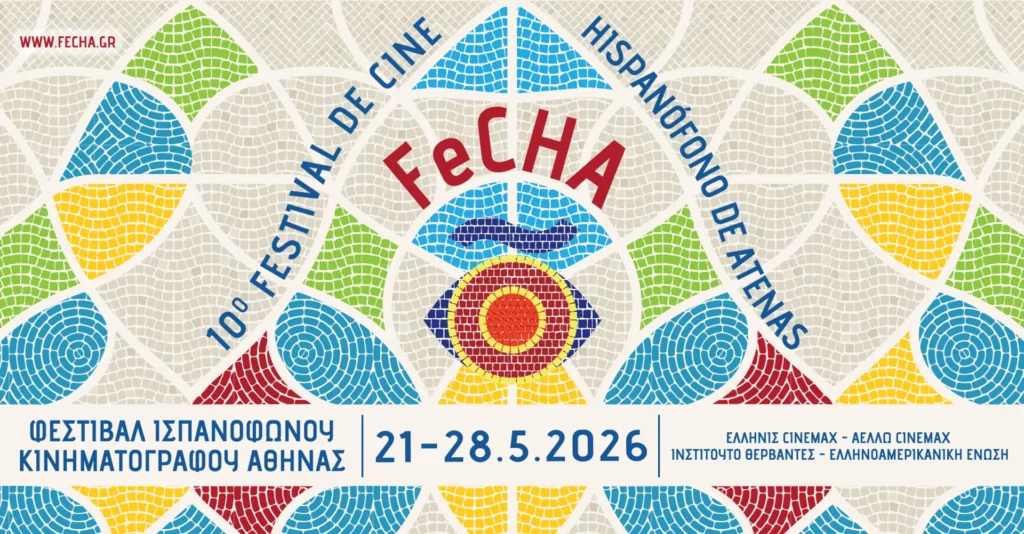
FeCHA and the international visibility of Spanish-language cinema
Over the years, FeCHA has established itself as one of the key platforms for contemporary Spanish-language cinema in southeastern Europe, presenting films from Spain, Argentina, Mexico, Chile, Colombia, Peru, Uruguay, Cuba and other countries across Latin America.
The 2026 edition features productions connected to major international festivals and awards including Cannes, Venice, San Sebastián, the Goya Awards and the Academy Awards. The lineup includes films and guests such as Helena Taberna, Albert Pintó, Asier Urbieta and Avelina Prat, combining auteur cinema, social narratives, documentary filmmaking and contemporary queer storytelling within a broader cultural dialogue.
Within this context, the inclusion of IUS of Time reinforces the growing international circulation of queer Spanish-language cinema and the increasing visibility of independent films rooted in local landscapes, identities and cultural memory.
Since its premiere, IUS of Time has screened at festivals including:
— 53rd Huesca International Film Festival (Spain)
— 31st Chéries-Chéris – Paris LGBTQIA+ Film Festival (France)
— 16th Écrans Mixtes Queer Film Festival in Lyon (France)
— 43rd Reeling: Chicago LGBTQ+ International Film Festival (USA)
— 63rd FICX Gijón International Film Festival (Spain)
— 42nd Schwule Filmwoche Freiburg – Freiburg Gay Film Festival (Germany)
Earlier this month, the film celebrated its Australian premiere at the 11th Geelong Pride Film Festival, marking its first screening in Oceania and further expanding its international reach across five continents.
With its growing international trajectory, IUS of Time is emerging as one of the most internationally visible fiction short films to emerge from Asturias in recent years.
Rural Asturias, queer memory and landscape-based cinema
Set in rural Asturias in northern Spain, IUS of Time follows Luca, a young photographer who arrives in a small mountain village to work on an artistic project and develops an unexpected emotional connection with Xuan, an older cheesemaker marked by silence, rumors and prejudice from the past.
Blending rural realism with poetic and symbolic storytelling, the film explores queer memory, emotional inheritance, masculinity, landscape and intergenerational connection. Through Luca’s camera, photography becomes both a narrative device and a form of emotional archive linking past and present.
Shot in locations including the Picos de Europa and villages such as Cabrales and Onís, the landscapes of Asturias become central emotional and narrative elements within the film, reinforcing its atmosphere of intimacy, isolation and suspended time.
IUS of Time was also supported by the Department of Culture, Llinguistic Policy and Sport of the Principality of Asturias, with the collaboration of Asturias Paraíso Natural Film Commission during the film’s development and production process.
The project evolved through an extended creative process that also generated the companion pieces Blow Down and Sunset in Paris, conceived as “Sketches of IUS” during the screenplay development stage. These works allowed the filmmakers to further explore character psychology, visual language and fragmented memory before the final structure of IUS of Time fully emerged.
Through its combination of rural realism, queer storytelling, landscape-based cinema and poetic visual language, IUS of Time is becoming part of a growing body of contemporary queer rural cinema emerging from the Spanish-speaking world.
“The international journey of IUS of Time has shown us how stories deeply rooted in local realities can emotionally connect with audiences across very different cultural contexts.”
— Roberto F. Canuto & Xu Xiaoxi
More information about IUS of Time
Official page of IUS of Time with festival selections, awards and production details.
Watch the official trailer of IUS of Time.
Header image: analogue behind-the-scenes photograph from IUS of Time by photographer Elmer Guevara / Almost Red Productions.